SBI4GALEV — Talks
Day 4
Friday 26 June 202612 talksThe final day of the conference focused on the practical application of Simulation-Based Inference (SBI) and deep learning to bridge the gap between complex simulations and observational data. Presentations spanned a wide range of scales, from the internal properties of stars and the circumgalactic medium to the large-scale cosmic web and galaxy merger histories. A recurring theme was the pursuit of computational efficiency, with several talks demonstrating how neural posterior estimators and differentiable simulations can replace slow traditional sampling methods. The day concluded with a look at the broader infrastructure of AI, discussing self-hosted models for education and ambient AI for scientific synthesis.
- Connecting Environment and Assembly to Measure the Formation Histories of Dark Matter Halos With GNN-powered SBI — Christian Kragh Jespersen
- Introducing L-Galaxies AD: an auto-differentiable galaxy evolution simulation — Andrew Green
- Exploring the Impact of Dust on Galaxy Luminosity Functions with Semi-Analytic Models — Sophie Newman
- Quantifying Environmental Information in Galaxy Evolution with Interpretable Machine Learning — Shun-ya S. Uchida
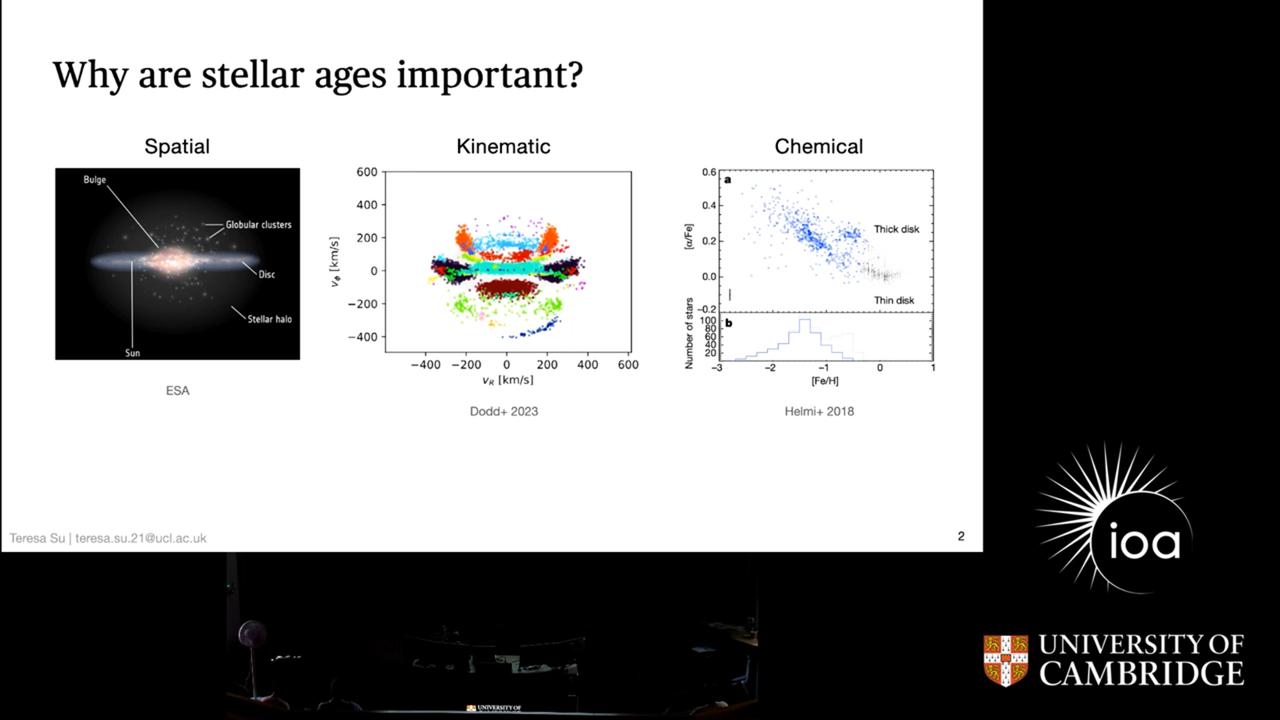
- Fast Stellar Age Inference for Galactic Archaeology with SBI — Shichen Su
- Simulation Based Inference for Understanding the Role of AGN in Galaxy Evolution — Thomas Bebbington
- Deep learning approaches for galaxy merger identification and classification: bridging simulations and observations — Subhrata Dey
- Inferring CGM Cloud Properties Using Simulation-Based Inference — Tanmay Singh
- Disentangling Feedback and Variance in 1,024 Milky Way-Mass DREAMS Simulations — Jonah Rose
- Image-Based Inference: Bridging Photometric Surveys and Spectroscopic Constraints — James Kostas Ray
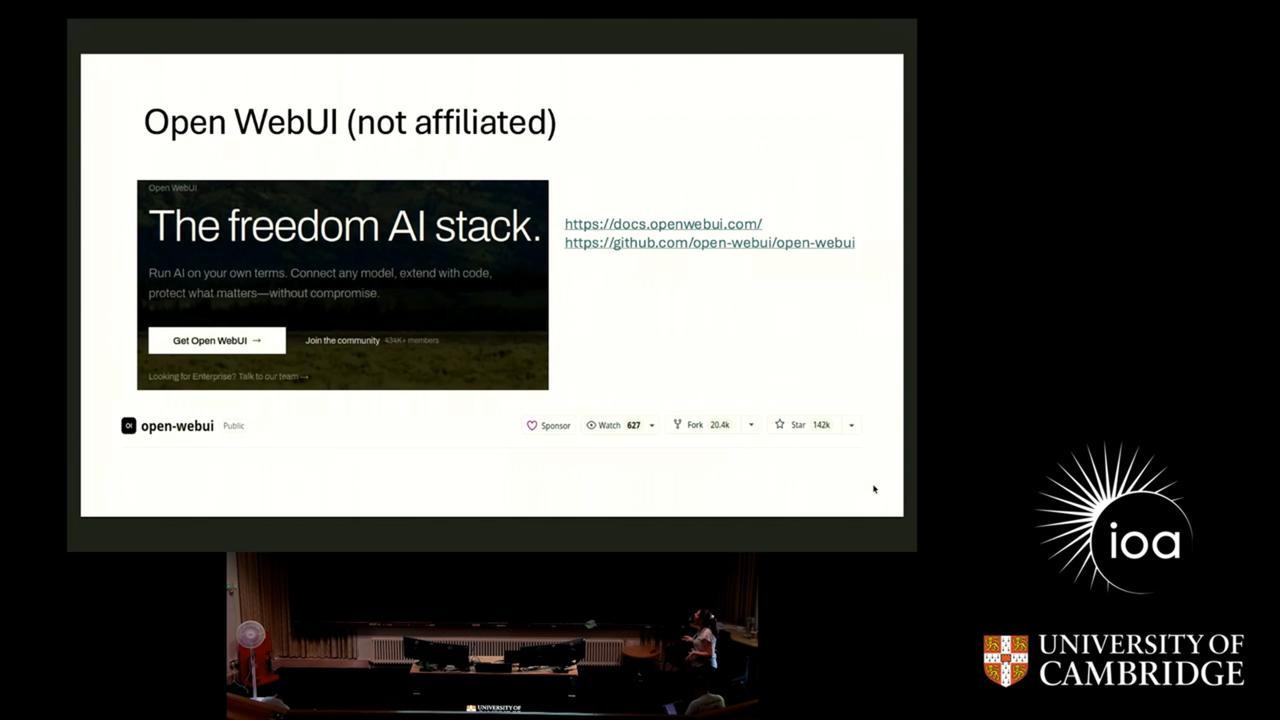
- Self-Hosted AI for Education — Sotiria Fotopoulou
- Ambient AI for Scientific Meetings — Chris Lovell
Day 3
Thursday 25 June 20265 talksDay 3 focused on the practical application of simulation-based inference (SBI) and machine learning to bridge the gap between complex astrophysical simulations and observational data. The sessions spanned a wide range of scales, from the global cosmological constraints of weak lensing and galaxy populations to the detailed physical conditions of the interstellar medium. A recurring theme was the optimization of these models, specifically through techniques to reduce computational costs, handle model misspecification, and leverage data-driven embeddings.
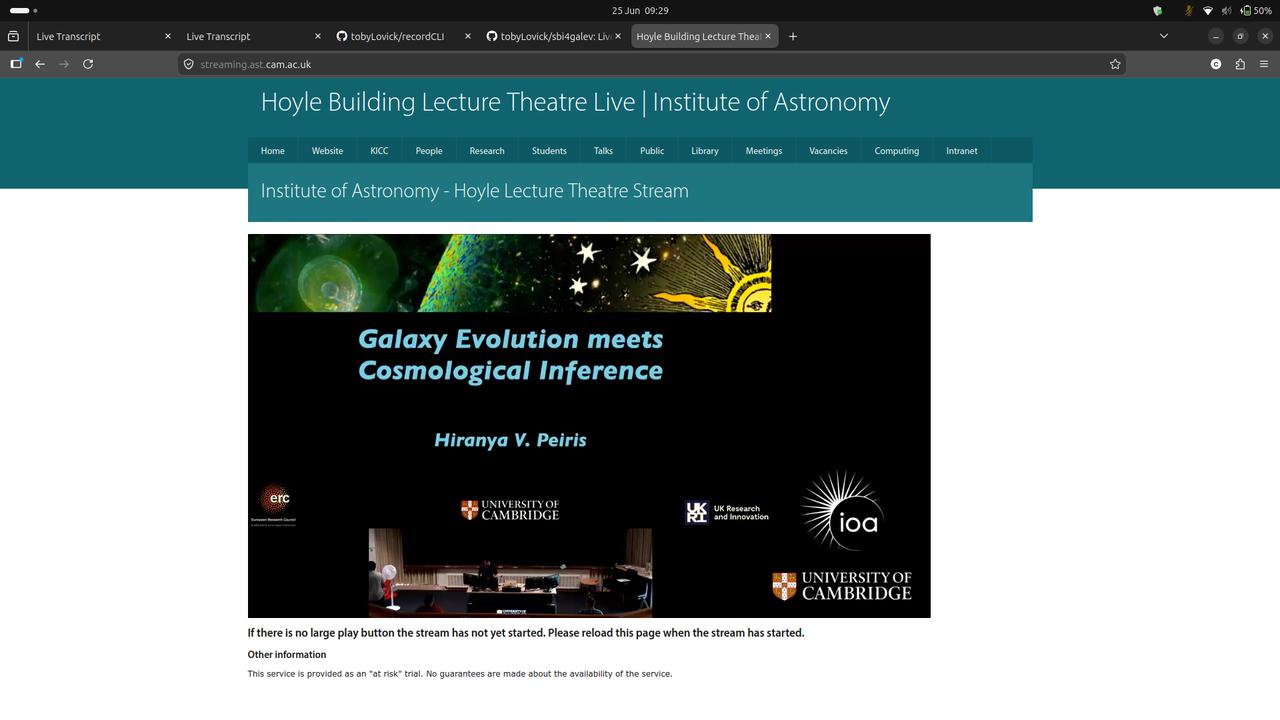

- Galaxy Evolution Meets Cosmological Inference — Hiranya Peiris
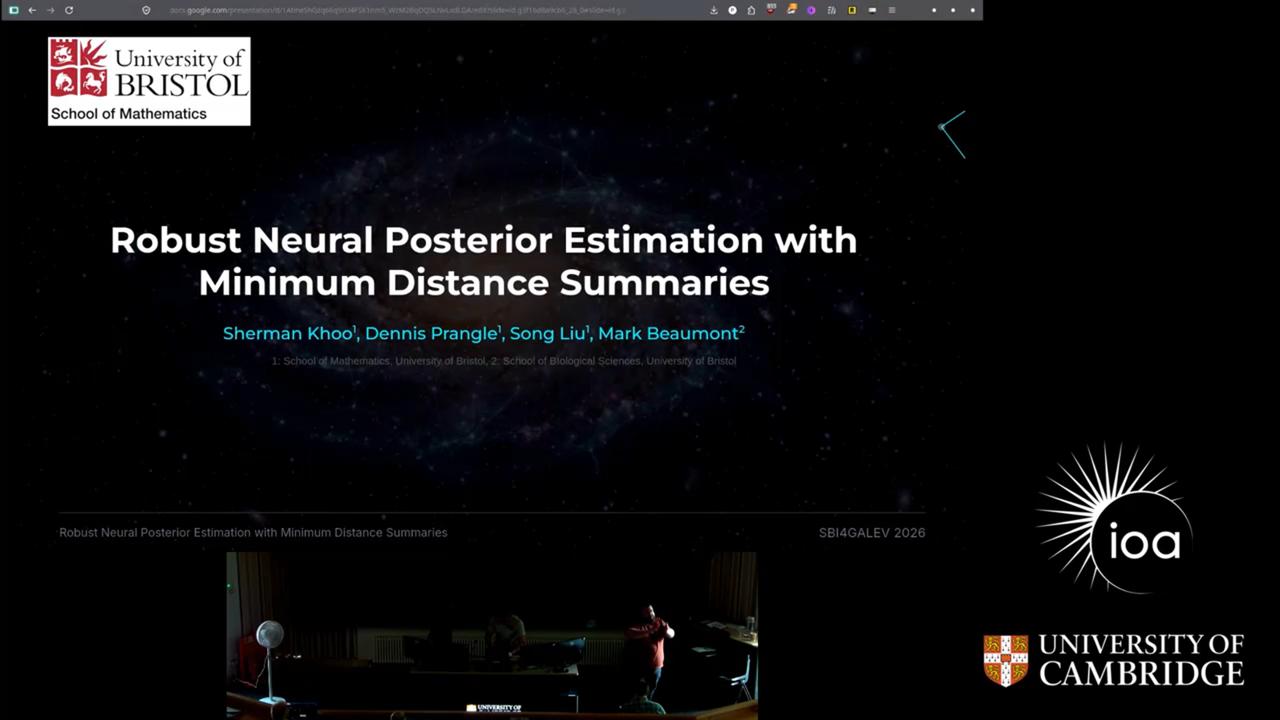
- Minimum Distance Summaries for Robust Neural Posterior Estimation — Sherman Khoo
- Field-level cosmology with <100 simulations using multifidelity SBI: a proof-of-concept for KiDS-legacy weak lensing — Alex Saoulis
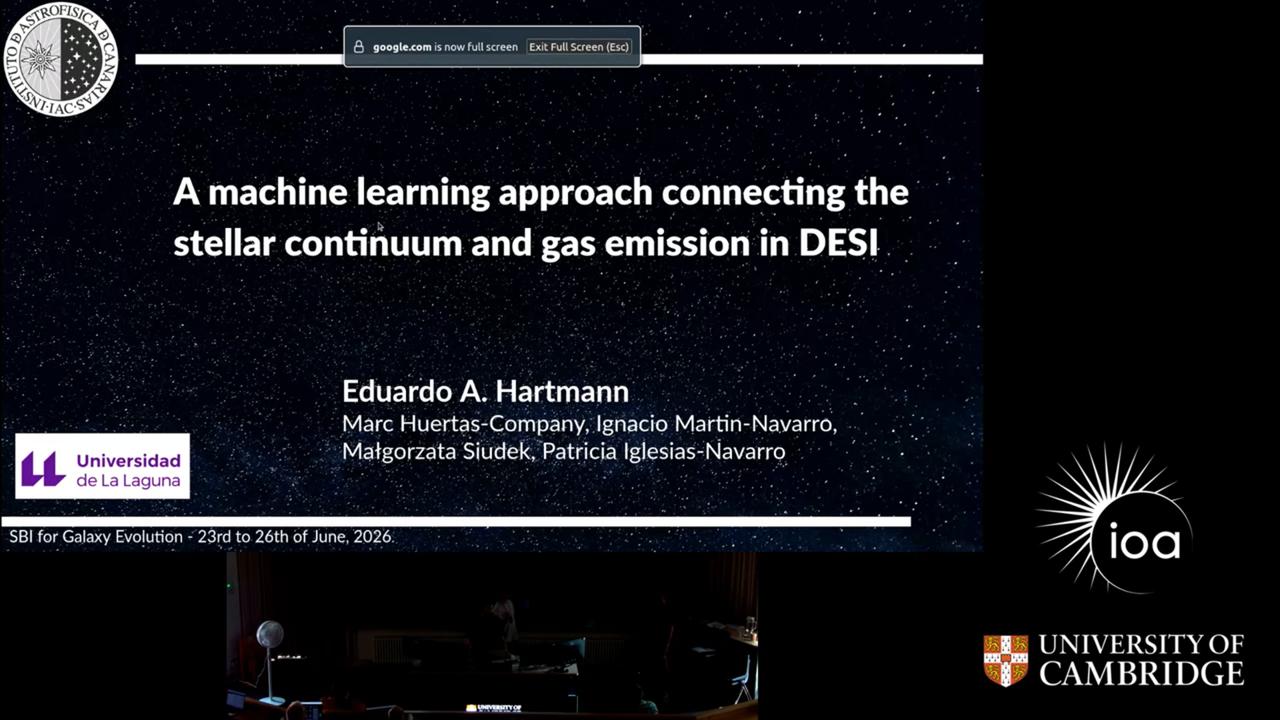
- Connecting Stars and Gas: a data driven approach to modeling gas emission based on stellar continuum using DESI — Eduardo Albuquerque Hartmann
- Mapping Nebular Structure and ISM Conditions with SBI — Caterina Bracci
Day 2
Wednesday 24 June 202612 talksThe second day of SBI4GALEV focused on scaling simulation-based inference to meet the demands of high-dimensional astronomical data and computationally expensive forward models. Presentations spanned a wide range of applications, from galaxy clustering and SED fitting to gravitational wave analysis for LISA, with a strong emphasis on reducing the simulation bottleneck. A significant portion of the day was dedicated to the emergence of diffusion models as flexible alternatives to normalizing flows for posterior estimation and data inpainting. The day concluded with a call for community standardization through a proposed SBI data challenge and the introduction of the Synference framework.
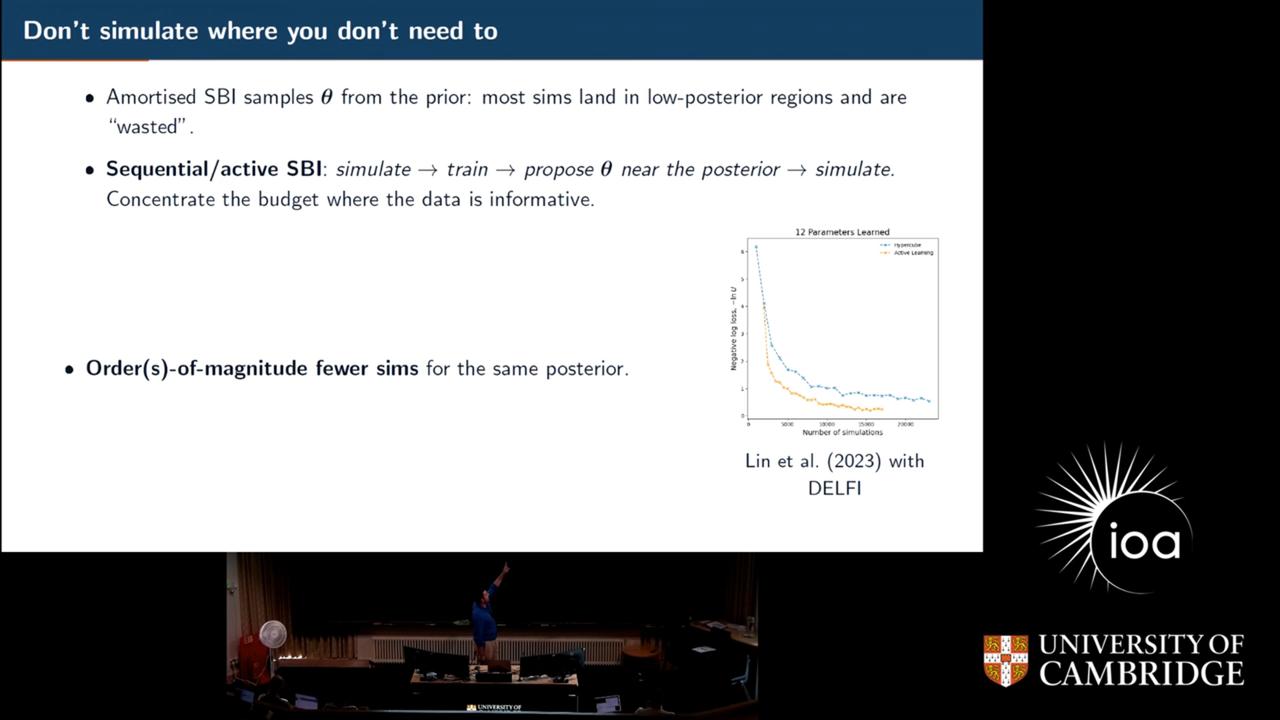
- Addressing the Simulation Bottleneck in Simulation-Based Inference — Maximilian von Wietersheim
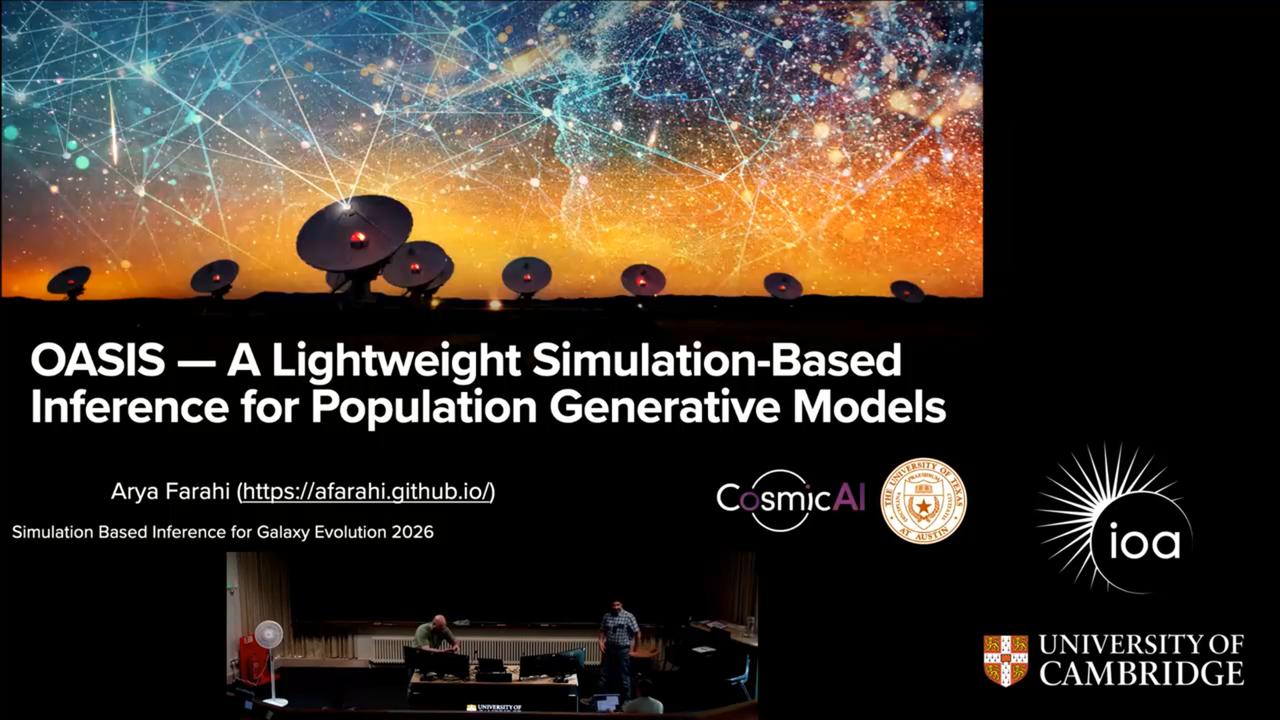
- OASIS: A Robust Framework for Population Inference in Astronomy — Arya Farahi
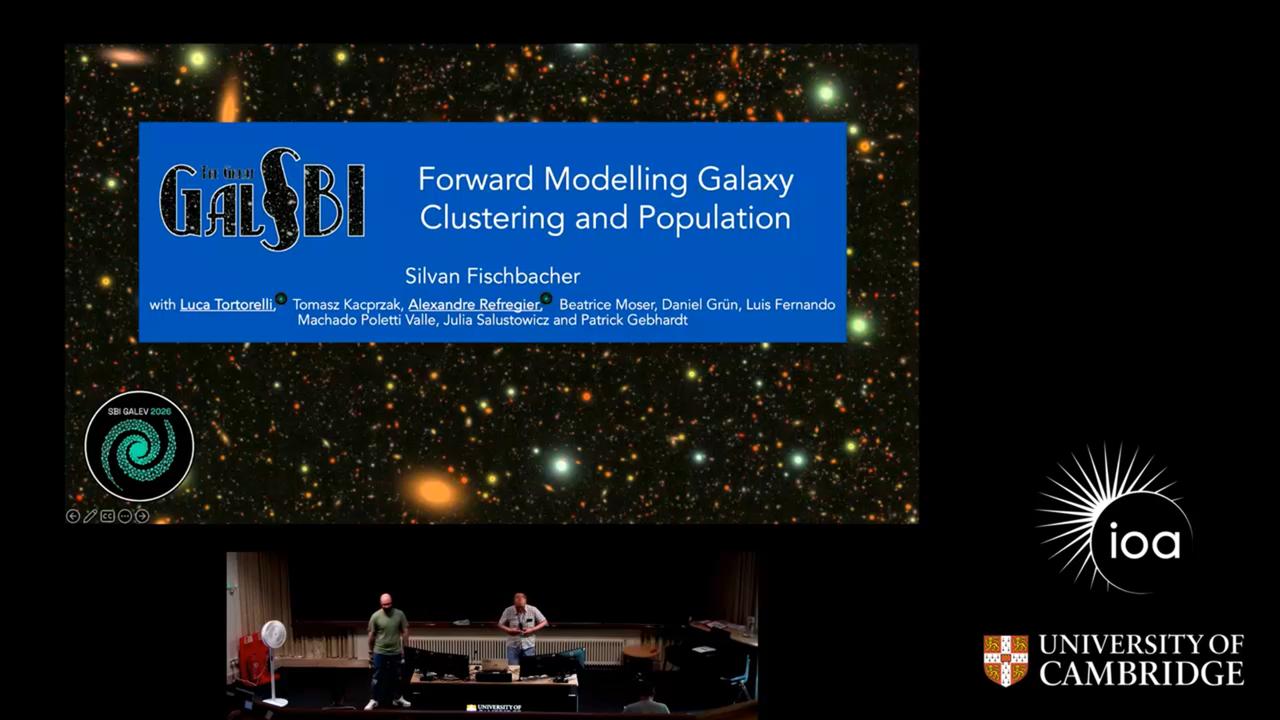
- GalSBI: Forward Modelling Galaxy Clustering and Population — Silvan Fischbacher
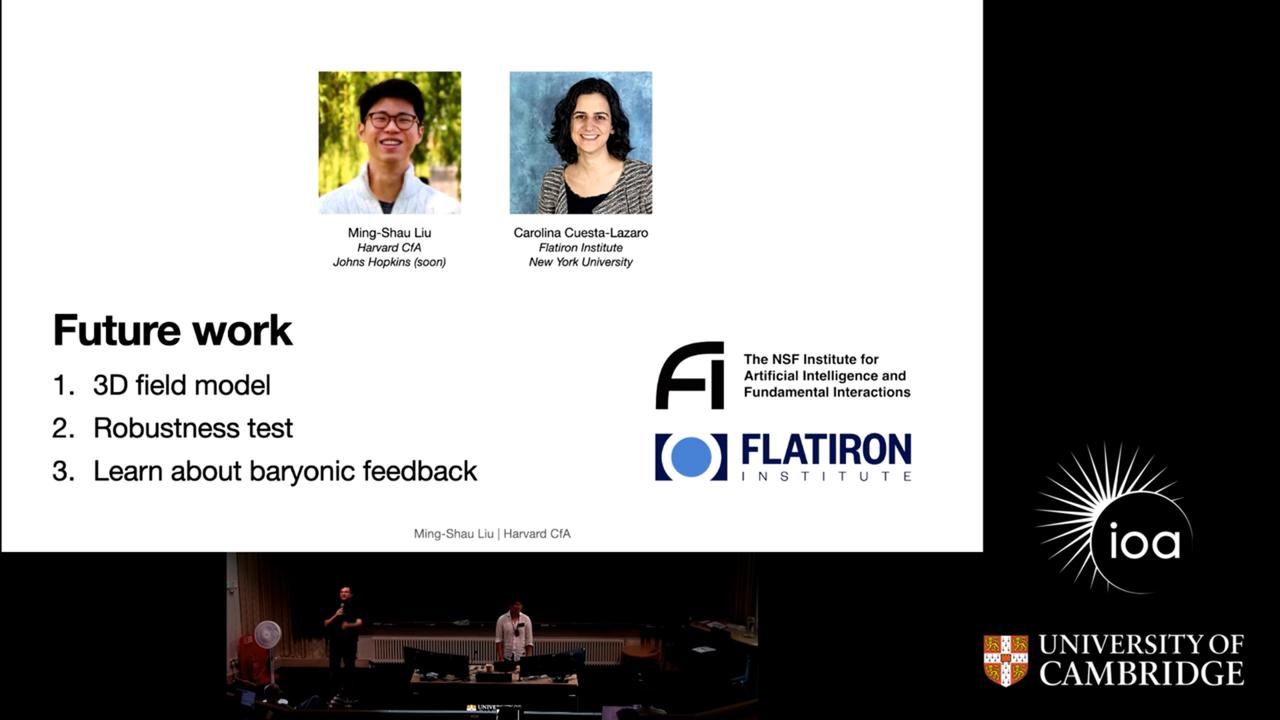
- Continuous Representation of Hydrodynamic Simulations for Robust SBI — Ming-Shau Liu
- Implementing 3D Intrinsic Alignment Models in Projected Simulations — Leonor Simões
- Diffusion Models for Simulation-Based Inference — Giuseppe Viterbo
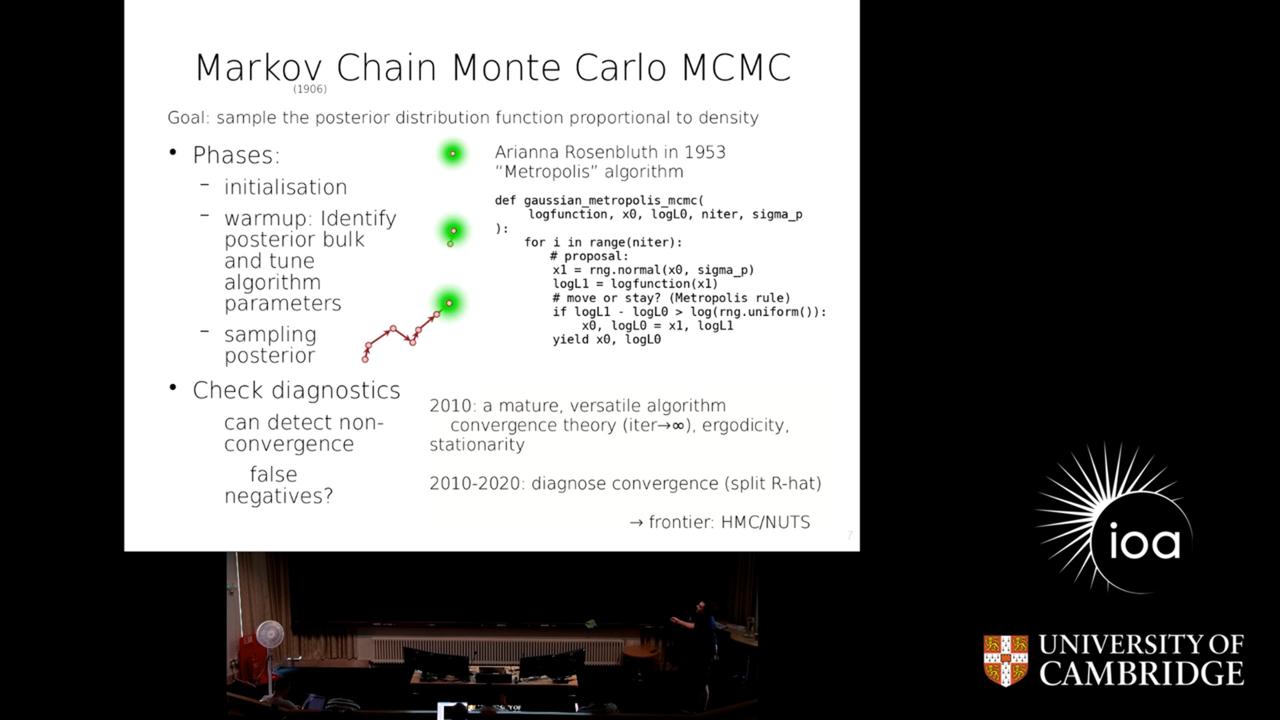
- Comparing Bayesian Inference Methods in Astronomy: HMC, Nested Sampling, and SBI — Johannes Buchner
- Test-time inference for Prior Change via Density Ratio Estimation — Yichen Zang
- Diffusion based SED fitting — Grégoire Aufort
- SBI for LISA — Philippa Cole
- Simulation-Based Inference (SBI) Data Challenge for Galaxy Evolution — Luca
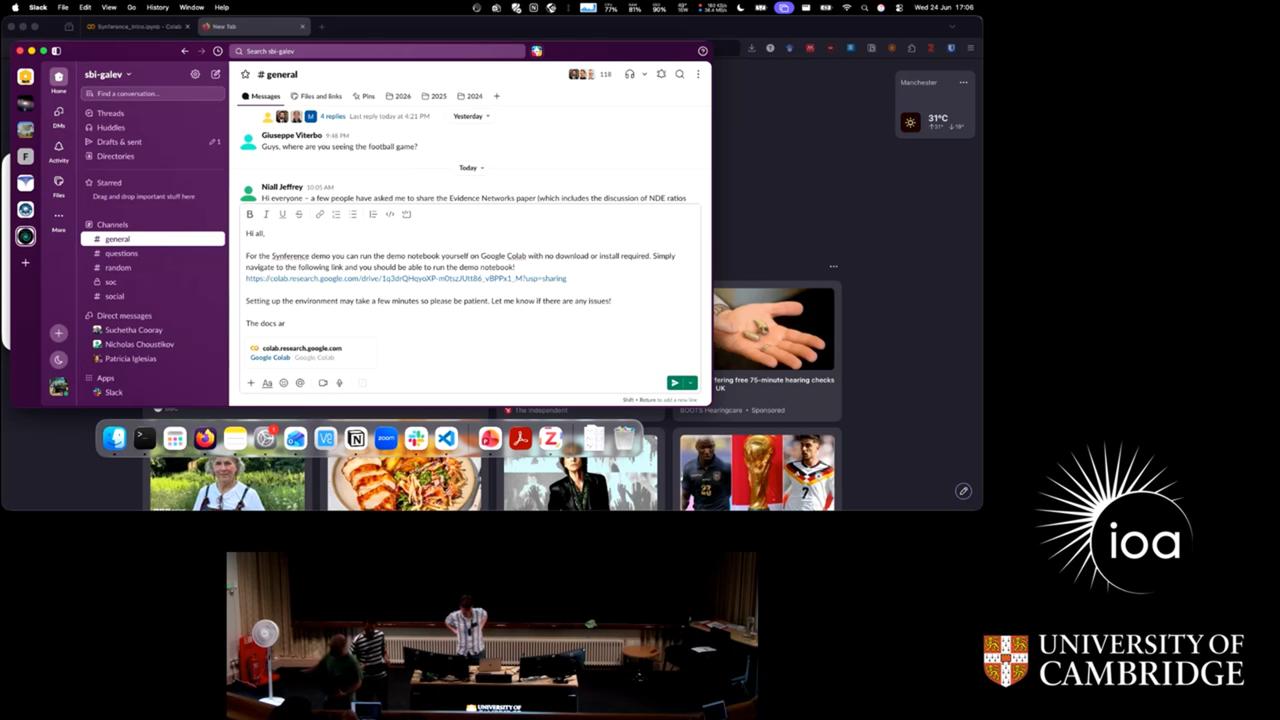
- Synference Tutorial — Thomas Harvey
Day 1
Tuesday 23 June 202610 talksThe first day of SBI4GALEV focused on the integration of Simulation-Based Inference (SBI) and differentiable programming to accelerate galaxy evolution research. Presentations spanned the development of high-performance JAX-based frameworks and the use of neural emulators to bypass the computational costs of radiative transfer and stellar population synthesis. A strong emphasis was placed on moving beyond traditional SED fitting toward more complex, spatially resolved, and physically nuanced models of galaxy structure and kinematics.
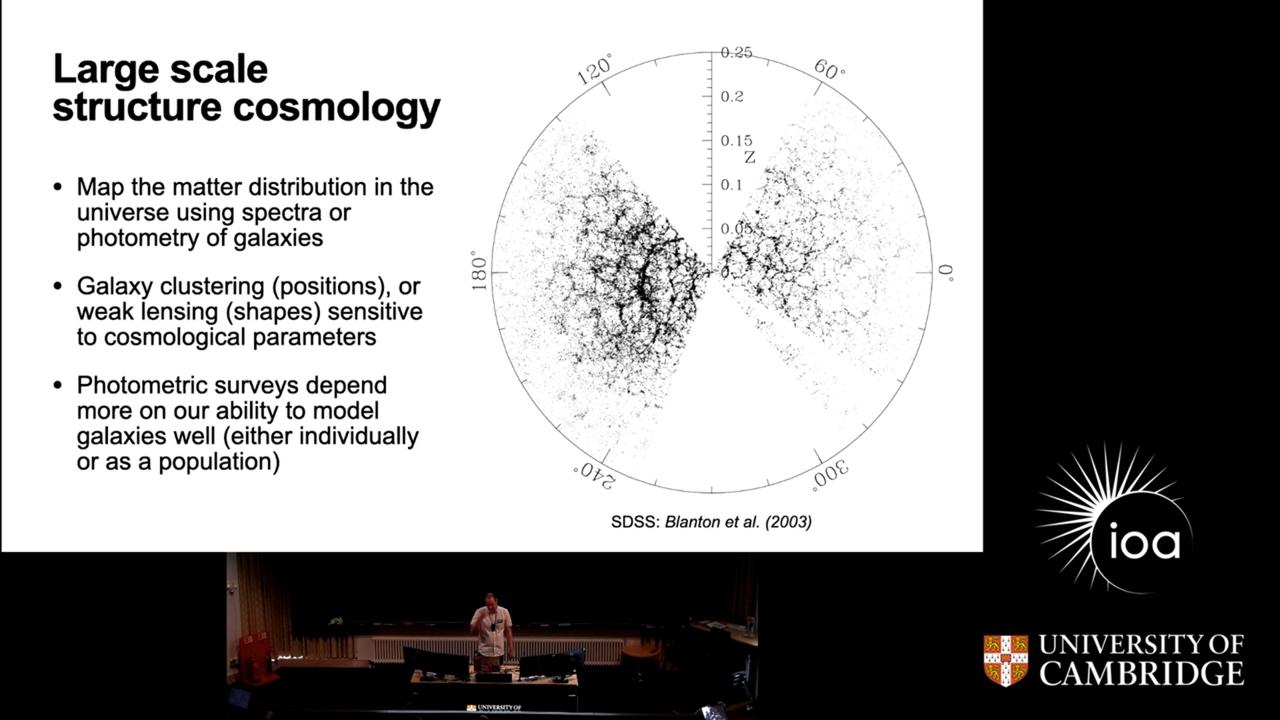
- Introduction to Likelihood-Free Inference — Tom
- Astronomic: A Plugin-Based Platform for Astronomical Data Analysis and Active Learning — Grant Stevens
- Pop-Cosmos: A Generative Model for the Galaxy Population — Stephen Thorp
- SE3D: A Novel Modeling Technique for Chromatic Resolved Galaxy Observations — Stephen Ramnichal
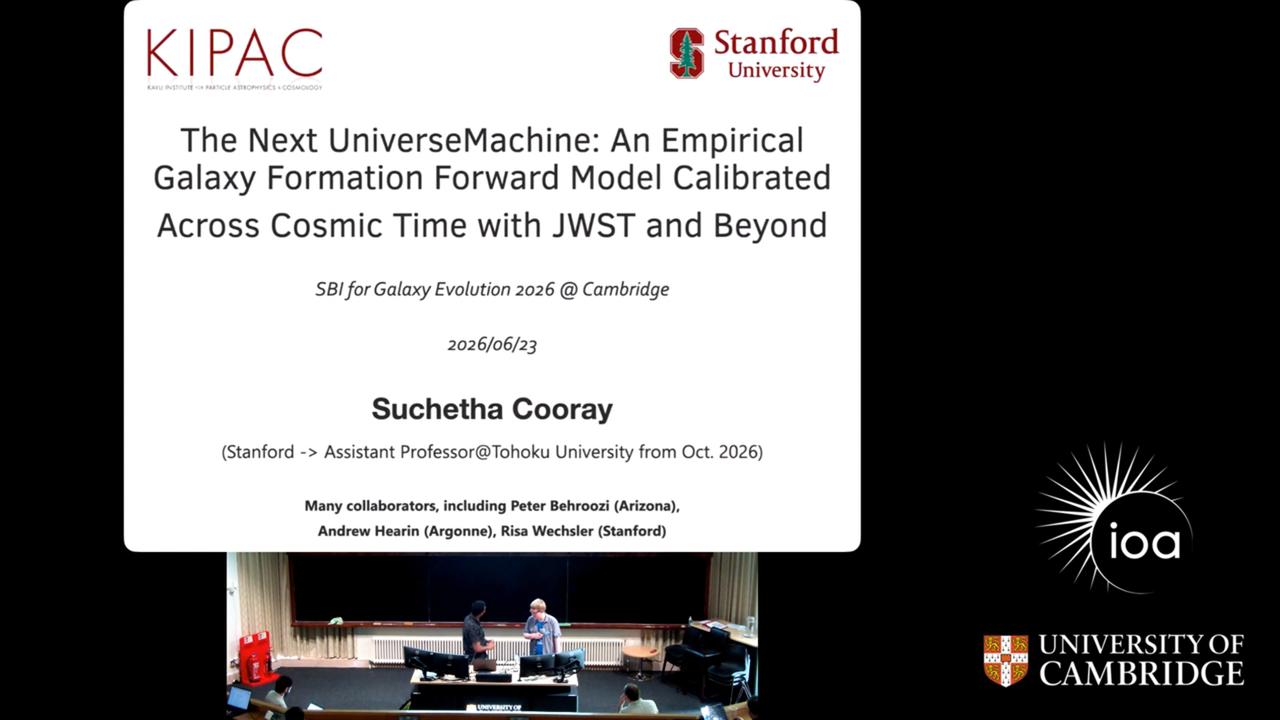
- UNiverse Machine 2 and Tengri: Differentiable Frameworks for Galaxy Formation and Inference — Suchetha Cooray
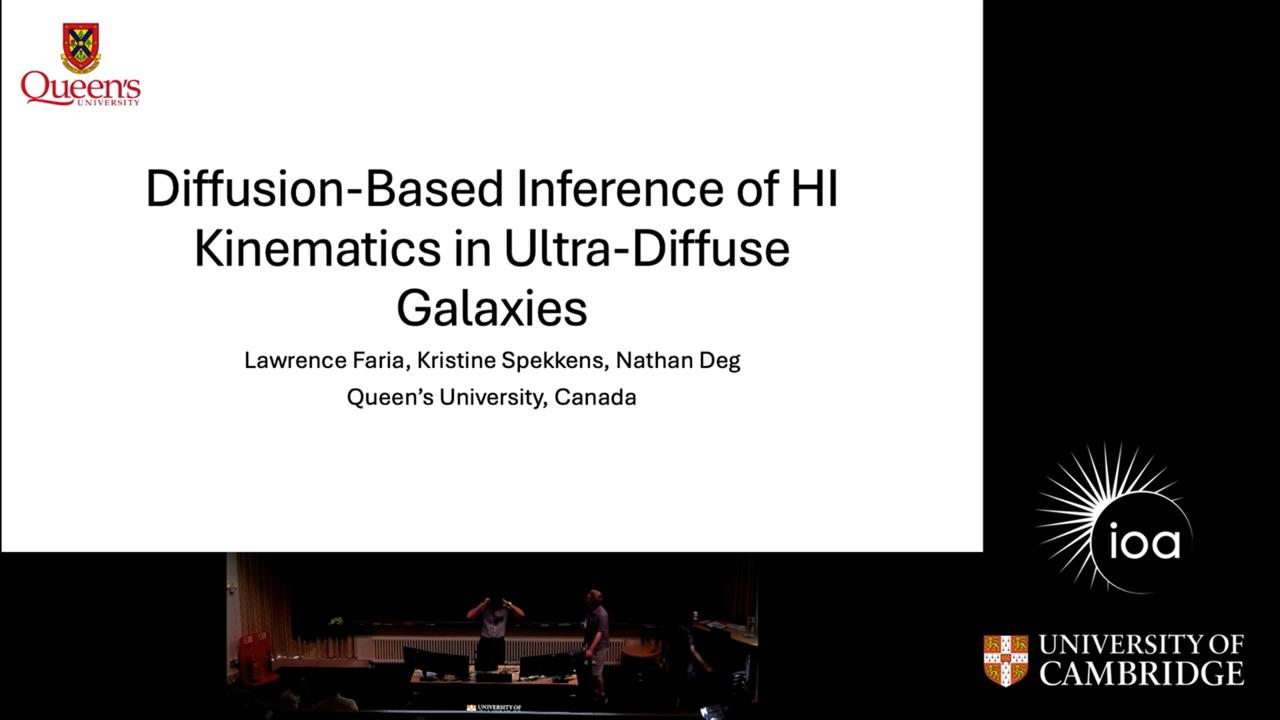
- Diffusion-Based Inference of HI Kinematics in Ultra-Diffuse Galaxies — Lawrence Faria
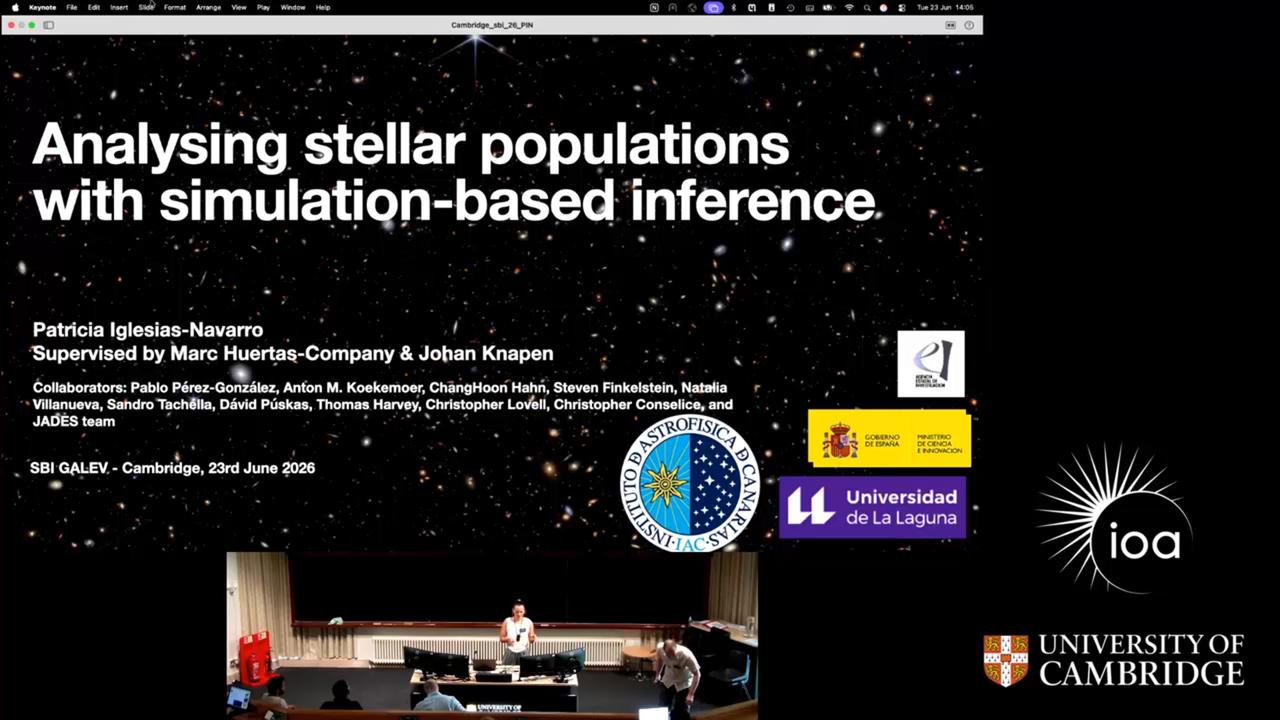
- Decoding the SED: Disentangling galaxy physics from the rest-frame optical — Patricia Iglesias-Navarro
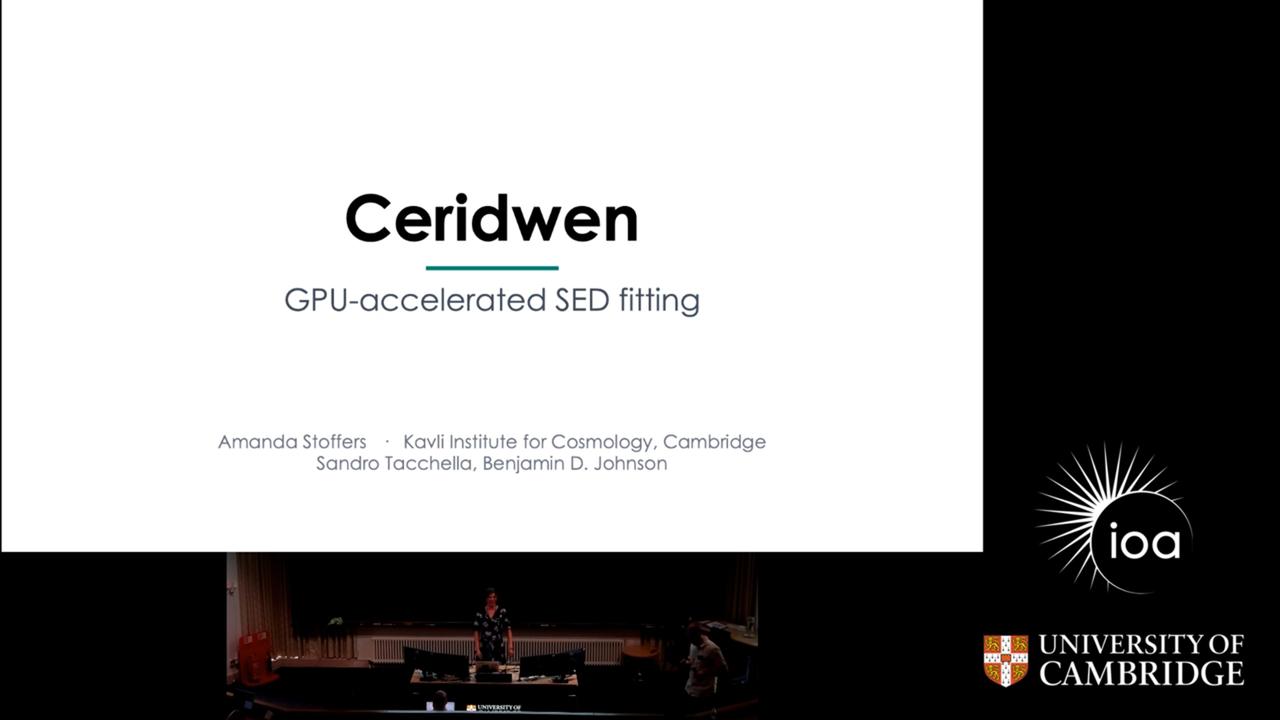
- Differentiable SED Simulation with Ceridwen — Amanda Stoffers
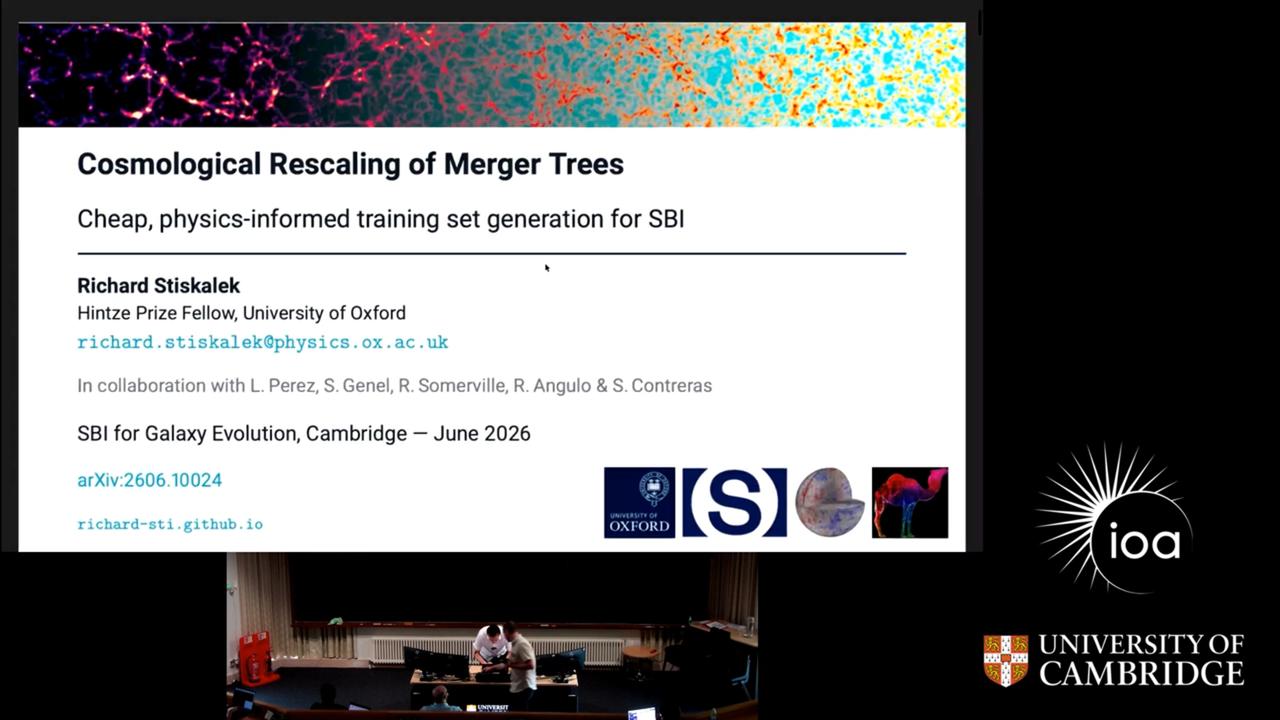
- Cheap, physics-informed training data for SBI — Richard Stiskalek
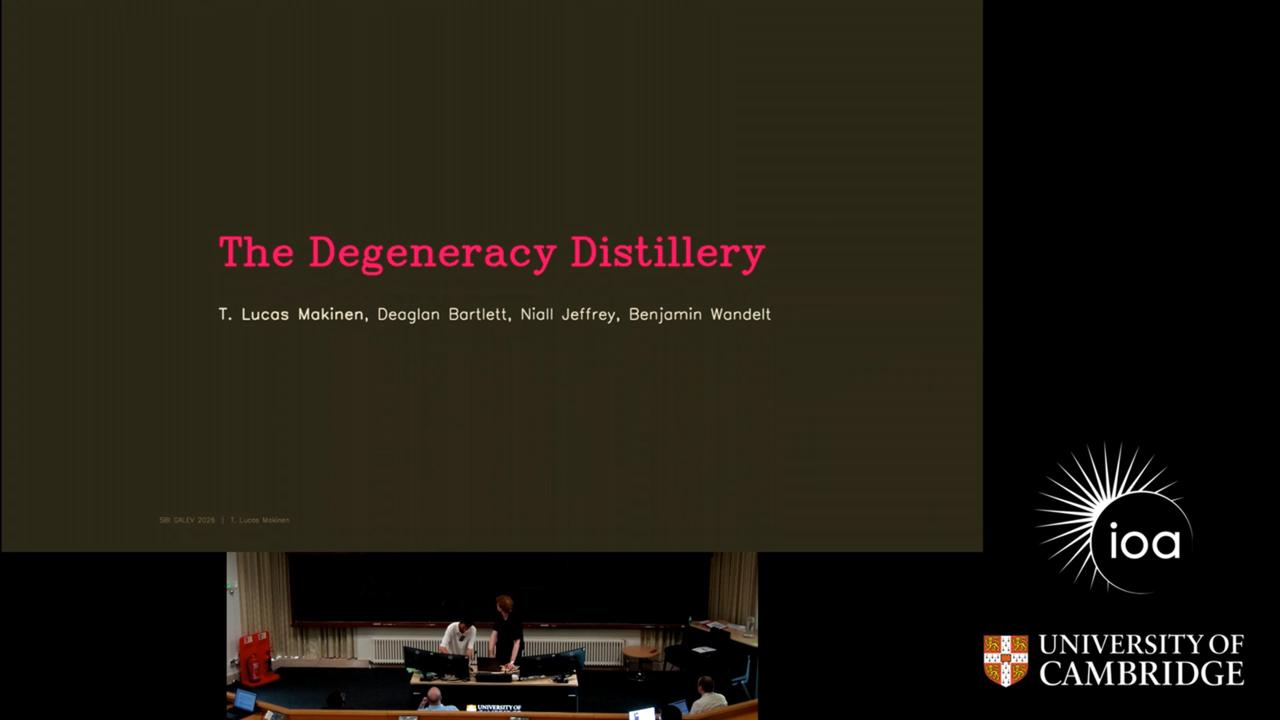
- Degeneracy Distillery: Learning Information Geometry for Simulation-Based Inference — Lucas Makinen